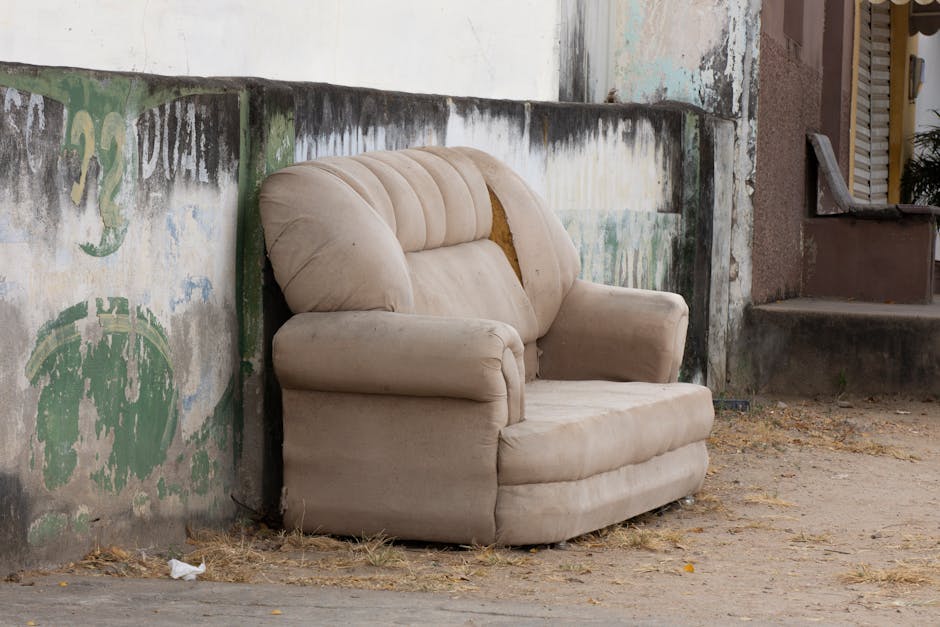
Bulky sofa disposal in Hanwell: costs and practical options

Getting rid of a large sofa sounds simple until you try to move it. Suddenly there's the awkward hallway bend, the narrow stairwell, the rain outside, and the realisation that the thing weighs far more than it looked at first glance. If you're looking into Bulky sofa disposal in Hanwell: costs and practical options, you probably want two things: a straightforward way to make the sofa disappear, and a clear idea of what it should cost.
This guide walks through the practical options available in Hanwell, how pricing is usually worked out, what can make the job easier or harder, and which route makes the most sense depending on your situation. Whether you're clearing one worn-out two-seater or dealing with a heavy corner unit in a flat, the aim here is to help you make a decent decision without the faff.
And yes, there is a difference between "getting it removed" and "getting it removed well". That's where the details matter.
Why Bulky sofa disposal in Hanwell: costs and practical options Matters
A sofa is one of those household items that quietly becomes the centre of a room, then one day becomes the main obstacle in the room. Once it's no longer usable, or you've upgraded and the old one is just taking up space, you need a removal plan that matches the size of the problem.
In Hanwell, that matters for a few reasons. First, bulky furniture is awkward to leave outside and hope for the best. Second, sofas are not the kind of thing you can just toss into a regular bin. Third, if you live in a flat, terrace, or converted property, access can be a genuine headache. Let's face it, a sofa can be more difficult to move than it looks. A standard three-seater in a narrow staircase can suddenly feel like it has been designed by a trickster.
Cost is important too. People often assume all sofa disposal costs the same, but in practice the final price depends on size, weight, access, labour, and whether the sofa is mixed with other items. A simple ground-floor collection will usually be less involved than removing a heavy recliner from a top-floor flat with limited parking. That's not just pricing logic; it's the reality of the job.
There's also the sustainability angle. If the sofa can be reused, refurbished, or broken down for recycling, that can be a better outcome than sending it straight to disposal. If you care about responsible handling, it is worth reading the company's approach to recycling and sustainability before you book anything. Small detail, big difference.
Practical takeaway: the cheapest option is not always the easiest, and the easiest option is not always the most responsible. The best choice usually balances access, speed, cost, and the condition of the sofa.
Table of Contents
- Why Bulky sofa disposal in Hanwell: costs and practical options Matters
- How Bulky sofa disposal in Hanwell: costs and practical options Works
- Key Benefits and Practical Advantages
- Who This Is For and When It Makes Sense
- Step-by-Step Guidance
- Expert Tips for Better Results
- Common Mistakes to Avoid
- Tools, Resources and Recommendations
- Law, Compliance, Standards, or Best Practice
- Options, Methods, or Comparison Table
- Case Study or Real-World Example
- Practical Checklist
- Conclusion
- Frequently Asked Questions
How Bulky sofa disposal in Hanwell: costs and practical options Works
Most sofa disposal jobs follow a fairly simple pattern, even if the sofa itself is anything but simple to move.
Usually, the process starts with a description of what needs removing: the sofa type, approximate size, where it is located, and whether there are stairs, lifts, parking issues, or other items to collect at the same time. A lot of pricing is based on this initial picture. If you only say "one sofa", you may get a vague estimate. If you say "a three-seater sofa bed from a first-floor flat with a tight stairwell and no lift", you'll usually get a much more realistic one. More useful, less guesswork.
From there, a collection service will normally assess the job and confirm the disposal method. Some sofas can be reused or donated if they're in very good condition. Others need to go through furniture disposal or general waste removal routes. If the item is damaged, stained, heavily worn, or structurally unsound, it may be handled as waste rather than reusable furniture.
If you're looking at a broader clear-out, it can be sensible to combine the sofa with other items. That is often where a service such as furniture clearance or furniture disposal becomes more efficient than arranging a one-off collection just for a single item.
For many households, the practical flow looks like this:
- You identify the sofa and where it's located.
- You request a quote with clear details.
- You agree a collection time.
- The sofa is removed safely from the property.
- It is sorted for reuse, recycling, or disposal where possible.
Simple enough on paper. The real challenge is usually access. A sofa in a ground-floor living room near the front door is a very different job from one wedged into a loft room with a bend in the stairs. You will notice that access issues are often what change the price more than the sofa itself.
Key Benefits and Practical Advantages
There are some obvious benefits to using a dedicated bulky sofa removal service, but there are also a few less obvious ones worth mentioning.
- Less physical strain: large sofas are awkward, especially where twisting or lifting is involved.
- Reduced risk of damage: door frames, walls, bannisters, and floors are all at risk if you try to force a sofa out unprepared.
- Faster resolution: what might take you an entire afternoon can often be handled in a short visit.
- Better disposal outcome: reusable furniture can be separated from waste where appropriate.
- Less disruption: useful if you're moving out, redecorating, or trying to make space quickly.
There is also a mental benefit people often underestimate. A bulky sofa sitting in a room becomes visual noise. It makes everything feel half-finished. Once it's gone, the room instantly feels more usable. A little dramatic? Maybe. But true enough.
If the sofa is part of a larger household project, it may make sense to look at related services like home clearance, house clearance, or even flat clearance. That can save repeat visits and reduce the overall hassle.
Who This Is For and When It Makes Sense
This kind of disposal is useful for plenty of people in real-life situations, not just landlords or people doing a major renovation.
You might need it if:
- your sofa is broken, sagging, stained, or no longer safe to use;
- you've ordered a new sofa and need the old one removed before delivery;
- you're moving house and want to travel lighter;
- you're clearing a rental property between tenancies;
- you manage a flat, office, or shared property with bulky furniture to remove;
- the sofa is too large or heavy to move yourself safely.
It also makes sense if you live in a building where DIY disposal would be stressful or risky. A first-floor flat, basement property, maisonette, or older house with tight stairs can turn a simple job into a frustrating one. In those cases, paying for the right service is often cheaper than damaging the sofa, the property, or your back. Truth be told, your back tends to lose that argument.
Some people try to solve the problem with a borrowed van, two friends, and a bit of optimism. That can work if the sofa is light and access is easy. But if you're already hesitating, that's usually a sign to choose a professional collection route instead.
Step-by-Step Guidance
If you want the smoothest possible sofa disposal experience, a little prep goes a long way.
1. Measure the sofa and the access route
Measure the sofa's width, depth, and height. Then check doorways, corridors, stairwells, and any tight corners. A sofa that fits in the room does not automatically fit out of the room. Annoying, yes. Common, absolutely.
2. Check the condition honestly
Is it reusable, or is it clearly at the end of the road? Be realistic. If the fabric is torn, the frame is unstable, or the cushions are flat beyond salvation, disposal may be the right route. Honest descriptions help pricing too.
3. Decide whether you're removing one item or more
If you have a chair, footstool, wardrobe, or other household items to clear at the same time, list them together. It may reduce the cost per item and save another appointment later.
4. Ask how the item will be handled
Good providers should be able to explain whether the sofa is likely to be reused, recycled, or disposed of. You do not need a lecture, just a clear answer. That transparency matters.
5. Confirm the quote details
Ask what the quote includes: labour, lifting, loading, disposal, parking complications, or additional items. If something is excluded, it should be clear upfront.
6. Prepare the space
Move small items, coffee tables, lamps, pet bowls, and anything else in the way. If there's a path from the sofa to the exit, clear it. It sounds obvious, yet this is the step people forget most often.
7. Keep the route safe on the day
Open gates if needed, make sure access points are usable, and be ready to point out any awkward bends or fragile surfaces. A five-minute chat at the start can prevent a messy ten-minute struggle later.
Expert Tips for Better Results
There are a few small choices that make a surprisingly big difference.
Be specific when requesting costs. "One sofa" is okay, but "one large corner sofa from a second-floor flat with no lift" is better. Pricing is usually driven by effort and access, not just the item count.
Group items where sensible. If the sofa is part of a wider furniture clear-out, it may be more efficient to arrange a broader collection. That is where services such as waste removal can be useful if you also have general clutter or mixed loads.
Take photos before booking. A few clear pictures from different angles can help avoid misunderstandings. Not glamorous, but very practical.
Ask about upstairs or difficult-access charges. Some jobs are straightforward. Others involve extra carrying time, parking distance, or awkward internal access. Better to know now than later.
Think about the furniture's end use. A sofa that's structurally sound may be suitable for reuse, while one with damaged upholstery might be a recycling or disposal case. The better you understand that distinction, the easier it is to choose the right service.
Use the job to clear the room properly. If the old sofa has been sitting under a blanket for months, this is your chance to deal with the dust, the missing remote, the old cushion, and that odd smell that nobody wants to identify. A bit of reset energy helps.
Common Mistakes to Avoid
People often make sofa disposal harder than it needs to be. Usually for understandable reasons, but still.
- Underestimating access issues: stairs, corners, and narrow doors change everything.
- Forgetting to measure: if the sofa is too large for the route out, the job becomes slower and more expensive.
- Assuming every sofa should go in the same way: reuse, recycling, and disposal are not identical paths.
- Not checking what's included in the price: quote details matter more than people think.
- Leaving it until moving day: last-minute removals are stressful and can limit your options.
- Trying to force the sofa through on your own: that's when scratches, strained muscles, and swearing tend to happen.
One particularly common mistake is forgetting about the parking side of the job. In many parts of Hanwell, if the vehicle can't get near the property, the loading time and effort go up. Small detail, bigger invoice. Not always, but often enough to matter.
Tools, Resources and Recommendations
You do not need specialist equipment for most sofa removal jobs, but a few practical tools help:
- a tape measure for the sofa and access route;
- a phone camera for clear photos;
- basic gloves if you are moving nearby items yourself;
- old blankets or sheets to protect floors and corners;
- a note of any parking, lift, or stair restrictions;
- a shortlist of items to dispose of at the same time.
If you're looking for a provider who handles furniture jobs as part of a wider clear-out, pages like about us can help you understand the company's approach, while pricing and quotes is a sensible place to check how estimates are usually handled. If you want to ask direct questions about access, timing, or a collection arrangement, contact us is the natural next step.
For customers who value assurance around handling and business practices, pages such as insurance and safety, health and safety policy, and payment and security can be useful reading before booking. It's the boring part, maybe, but boring is fine when it gives peace of mind.
Law, Compliance, Standards, or Best Practice
For bulky sofa disposal, the important thing is not to treat it like ordinary household waste that can be abandoned wherever convenient. In the UK, furniture disposal should be handled responsibly, with attention to reuse, recycling, safe handling, and lawful disposal routes. Exact duties can vary depending on who owns the furniture, where it is located, and whether the property is domestic or commercial, so it is wise to keep things practical rather than overcomplicated.
From a best-practice point of view, a good disposal process should aim to:
- protect the property during removal;
- avoid unsafe manual lifting;
- separate reusable items from waste where possible;
- dispose of non-reusable items through appropriate channels;
- provide clear pricing and clear expectations;
- handle access and loading safely.
If you are arranging clearance for a rented property, a managed flat, or a business space, it can also make sense to look at services such as office clearance or business waste removal when the sofa is just one part of a broader set of items. That helps keep the process orderly, which is very underrated.
There are also service-level expectations worth caring about: transparent communication, safe manual handling, punctual arrival windows where possible, and a sensible approach to mixed loads. If a company is vague about these basics, that's usually a warning sign. Not always, but enough to keep your antennae up.
Options, Methods, or Comparison Table
There are several practical ways to deal with a bulky sofa. The best choice depends on condition, access, time, and budget.
| Option | Best for | Typical strengths | Limitations |
|---|---|---|---|
| Private bulky item collection | One or two large items | Convenient, direct, usually includes lifting and loading | Cost depends heavily on access and item size |
| Furniture reuse or donation route | Sofas in very good condition | Potentially better environmental outcome | Condition standards can be strict and collection may be limited |
| DIY van hire | People with strong access and help available | Can appear cheaper at first glance | Time, lifting risk, fuel, parking, and damage risk add up quickly |
| Combined furniture clearance | Multiple items or room refresh projects | Often more efficient per item | Needs a fuller inventory and clearer planning |
| General waste removal | Mixed household items with a bulky sofa included | Flexible for broader clear-outs | May be less cost-efficient if the sofa is the only item |
In plain English: if the sofa is the only problem, a direct bulky item collection is often the cleanest solution. If you're also clearing a room, a home or furniture clearance route may be better value. If the sofa is reusable, that route may be worth exploring first. If it is heavy, awkward, and in a top-floor flat, DIY is usually the least appealing choice. Fair enough, really.
Case Study or Real-World Example
Picture a couple in Hanwell replacing a three-seater sofa after years of use. The old one is still intact, but the cushions are sagging, the fabric is worn at the arms, and there's no way it's going back into the living room once the new one arrives.
They first considered hiring a van, but the sofa sits in a first-floor flat with a narrow staircase and no lift. The front door opens onto a shared hallway, parking is tight, and the sofa needs to turn at the top of the stairs. They could probably manage it with enough people, enough patience, and perhaps a small miracle. But it would be slow and awkward.
Instead, they request a quote with photos, measurements, and access notes. The price reflects the carrying effort and the access conditions, but the job is completed in one visit. The room is cleared before the new sofa arrives, no walls are scraped, and nobody spends the evening nursing a twisted shoulder. Not exactly thrilling, but a good outcome. Which is the point.
That kind of situation is very common. The sofa itself is only part of the story. The stairs, the corridor, the timing, the parking, and the condition all shape the final experience.
Practical Checklist
Use this simple checklist before booking bulky sofa disposal in Hanwell:
- Measure the sofa and the tightest points along the route out.
- Take a few clear photos from different angles.
- Note whether it is on a ground floor, first floor, or higher.
- Check whether a lift is available and usable.
- Think about parking or loading access.
- Decide whether other furniture should go too.
- Confirm whether the sofa is reusable, damaged, or ready for disposal.
- Ask what the quote includes.
- Confirm the collection time and any preparation needed.
- Clear the path and remove obstacles before the team arrives.
If you do those ten things, the job usually gets easier. Much easier, in fact.
Conclusion
Bulky sofa disposal does not need to be complicated, but it does need a bit of planning. The main things that affect cost are sofa size, access, lifting difficulty, and whether you're removing more than one item. The main things that affect the quality of the experience are clarity, preparation, and choosing the right disposal route for the sofa's condition.
If the sofa is still in decent shape, reuse may be worth considering. If it is worn out, a professional collection is often the most practical and least stressful option. And if you're clearing a whole room or property, it can be smarter to bundle the job into a broader clearance rather than tackling one awkward item at a time.
Get a free quote today and see how much you can save.
For a final bit of reassurance: once the sofa is gone, the space usually feels bigger straight away. Cleaner, calmer, lighter. A small win, but a satisfying one.
Frequently Asked Questions
How much does bulky sofa disposal in Hanwell usually cost?
Costs vary depending on the sofa size, the number of items, access conditions, and how much lifting is involved. A single easy-access sofa will usually cost less than a heavy item from a top-floor flat with no lift.
Is it cheaper to dispose of a sofa with other furniture?
Often yes. If you have a chair, table, mattress, or other items to remove as well, combining them into one visit can be more efficient than booking separate collections.
Can a sofa be collected from a flat?
Yes, in many cases. The important issue is access. Stairs, lifts, communal hallways, and parking can all affect the process and the price.
What happens if my sofa is too big for the stairs?
The removal team may need to assess the route carefully and use a more suitable lifting approach. In some cases, the item may need partial dismantling if that is practical and safe.
Do I need to move the sofa outside before collection?
Usually not, and that is often the point of using a collection service. The team should normally remove it from inside the property, provided access has been clearly described.
Can an old sofa be reused instead of disposed of?
If it is in good, clean, and usable condition, reuse may be possible. If it is stained, damaged, or structurally unsound, disposal is more likely to be the correct route.
How should I prepare before the sofa is collected?
Measure the route, clear obstacles, take photos if needed, and make sure any parking or access instructions are easy to follow. A bit of preparation saves a lot of hassle.
Is DIY sofa disposal a good idea?
It can be for small, light items with easy access, but bulky sofas are often awkward and risky to move. If there are stairs, narrow turns, or no easy vehicle access, professional removal is usually simpler.
What if I have more than one bulky item?
It is usually best to mention everything in one go. That helps with pricing, vehicle planning, and the overall disposal method. Hidden extras tend to cause delays.
How quickly can a sofa be removed?
That depends on availability, access, and the details of the job. If the sofa is easy to reach and the booking is straightforward, removal can often be arranged quite quickly.
What should I ask before accepting a quote?
Ask what the quote includes, whether labour and loading are covered, whether access issues could change the price, and how the sofa will be handled after collection. Clear questions lead to clearer answers.
Where can I check more about the company before booking?
It is sensible to review pages such as about us, recycling and sustainability, and pricing and quotes so you understand the service approach before you commit.